If you’re searching where do I register my dog in Gooding County, Idaho for my service dog or emotional support dog, the key thing to know is this: dog licensing (registration) is usually handled locally—most often by your city (if you live inside city limits) or by the agency that provides animal control/rabies enforcement for your area.
This page explains how a dog license in Gooding County, Idaho typically works, where to start, what rabies documentation you may need, and how licensing differs from a dog’s status as a service dog or an emotional support animal (ESA).
Where to Register or License Your Dog in Gooding County, Idaho
Because licensing is often managed at the city level, start with the city office where you live (for example, Gooding or Wendell). If you live in an unincorporated part of the county, or if you’re unsure who provides enforcement in your area, the county sheriff’s office can help you confirm the correct point of contact for animal control dog license Gooding County, Idaho questions.
City of Gooding (City Hall)
City of Wendell (City Hall)
Gooding County Sheriff’s Office (County guidance / enforcement contact)
Overview of Dog Licensing in Gooding County, Idaho
What “dog registration” usually means
In everyday terms, “registering your dog” typically means obtaining a local dog license (sometimes called an animal license) and keeping any required tag or documentation on file. A dog license helps local government agencies identify owned dogs, reunite lost pets, and support public health rules such as rabies control.
Gooding County licensing is often city-based
Gooding County includes multiple communities and jurisdictions. In many Idaho counties, dog licensing requirements and fees are set by the city for residents inside city limits, while county enforcement may apply in unincorporated areas. That’s why the most accurate first step is to contact the official office for your address (for example, the City of Gooding or City of Wendell).
Rabies vaccination requirements
Local licensing commonly requires proof of current rabies vaccination at the time you purchase or renew a license. For example, the City of Gooding states that rabies vaccination is required when purchasing a license and that dogs (4 months and older) must be licensed annually. Even when vaccination schedules differ (some rabies vaccines are valid for longer periods based on veterinary guidance and product labeling), local agencies may still require that your dog be “current” according to your veterinarian’s certificate and local rules.
How Dog Licensing Works Locally in Gooding County, Idaho
Step 1: Identify your jurisdiction (city limits vs. county)
The licensing process starts with a simple question: Do you live inside city limits? If yes, your city hall or city clerk typically manages licensing (and sets the fee schedule) under city ordinance. If you are outside city limits, you may need to follow county guidance or the agency that provides animal control/rabies enforcement for your area. If you’re unsure, call an official office and ask where licensing is processed for your address.
Step 2: Gather documents (rabies certificate and more)
Most licensing counters will ask for rabies vaccination proof, and some may ask for other information such as your contact details, a description of the dog, and whether the dog is spayed/neutered (often tied to fees). Keep a copy of the rabies certificate in your records and consider having a digital photo available for quick reference.
Step 3: Apply, renew, and keep tags/records current
Many local governments license dogs on an annual cycle. After approval and payment, you may receive a license number and/or tag. Keep the license information updated if you move, change phone numbers, or transfer ownership. Remember: obtaining a local license does not authorize a dog to be off-leash or “at large.” Leash and nuisance rules still apply even when a dog is licensed.
What if your dog is a service dog or emotional support animal?
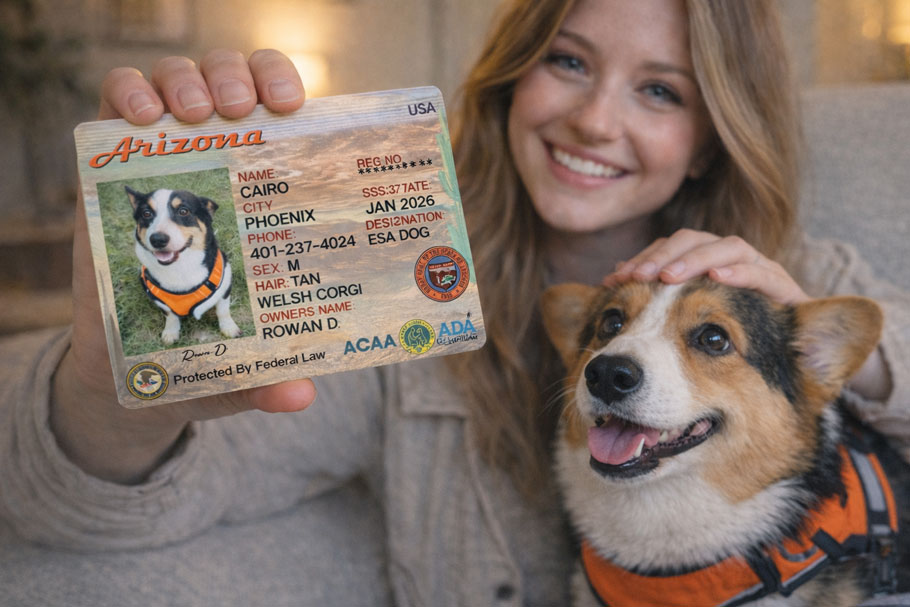
Service dogs and ESAs can still be subject to local animal control and public health requirements, including rabies rules and local dog licensing. In other words, a service dog’s public-access protections do not automatically eliminate local licensing obligations. The best approach is to complete local licensing first, then separately understand the legal rules that apply to service dogs (public access) or ESAs (usually housing).
Service Dog Laws in Gooding County, Idaho
Service dog vs. dog license: they are different
A dog license in Gooding County, Idaho (or in your city) is a local registration system—usually tied to identification and rabies compliance. A service dog, on the other hand, is defined by law based on individual training to perform tasks for a person with a disability. The two are separate: licensing is local administration; service dog status is about training and the handler’s disability-related need.
Public access rules (ADA basics)
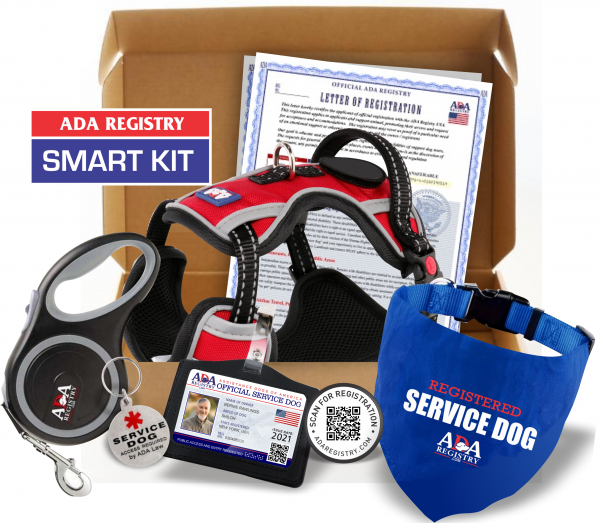
Under the Americans with Disabilities Act (ADA), service animals are generally permitted in places open to the public when they are under control and housebroken. If it is not obvious that a dog is a service animal, staff are generally limited to asking two questions: whether the dog is required because of a disability, and what work/task the dog has been trained to perform. Staff cannot require documentation, cannot demand an ID card, and cannot require the dog to demonstrate the task.
Service dogs are not exempt from local requirements
Even though service dogs have public-access protections, handlers are generally still expected to follow local animal control and public health rules. That means you may still need to complete city or local licensing and maintain required rabies vaccination documentation. If you’re trying to determine where to register a dog in Gooding County, Idaho specifically for a service dog, start with the same licensing office you would use for any dog, then keep your training records and vaccination documents for your own files.
Emotional Support Animal Rules in Gooding County, Idaho
ESA vs. service dog: not the same legal category
An emotional support animal (ESA) is not a service animal under the ADA for public-access purposes. ESAs do not automatically have the right to enter restaurants, stores, or other public places where pets are not allowed. ESAs most often come up in housing situations, where a person with a disability may request a reasonable accommodation to keep an assistance animal even with a “no pets” rule.
Housing context: reasonable accommodation (general concept)
In housing, assistance animals (which can include emotional support animals) may be allowed as a reasonable accommodation when they help a person with a disability use and enjoy a dwelling. Housing providers may request reliable information when the disability-related need is not obvious, but the process and documentation standards differ from “registering” a pet or buying an online certificate.
Licensing and rabies rules still apply
Even if your dog is an ESA for housing purposes, your dog may still need a local license and proof of rabies vaccination like any other dog. So if your question is where do I register my dog in Gooding County, Idaho for my service dog or emotional support dog, the “register” part usually remains the same: license locally through the city/county office that serves your address, and treat service dog/ESA status as a separate legal issue depending on where you need accommodations (public access vs. housing).
Frequently Asked Questions
Disclaimer: Licensing requirements and office locations may change. Residents should verify details with their local animal services office within Gooding County, Idaho.